



Plan to Succeed in Bad Weather: What We Shared in February
February in Scotland reminded everyone of something most delivery teams already know: winter doesn’t just slow a housing site down – it exposes weak points, creates risk, and turns small issues into programme creep.
Over the past month we shared a series of practical insights aimed at developers and site teams: how to plan for bad weather before it becomes a problem.
Rather than generic advice, we focused on simple, site-first actions that protect programme, budget, safety and quality when conditions inevitably turn.
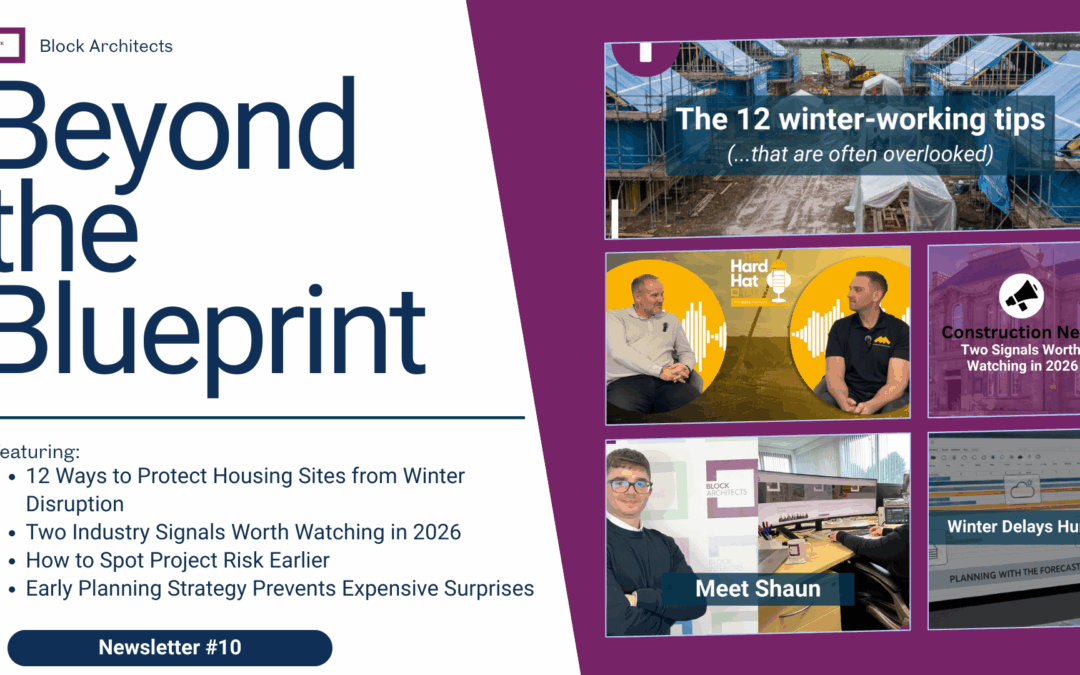
What you’ll get in this edition (60 sec preview)
- 12 practical ways to protect housing sites from winter disruption
- Two industry signals worth watching in 2026
- How Block Studio visuals help teams spot project risk earlier
- How early planning strategy prevents expensive programme surprises
- A quick introduction to our newest team member
- Two recent Hard Hat Talks conversations from the front line of construction
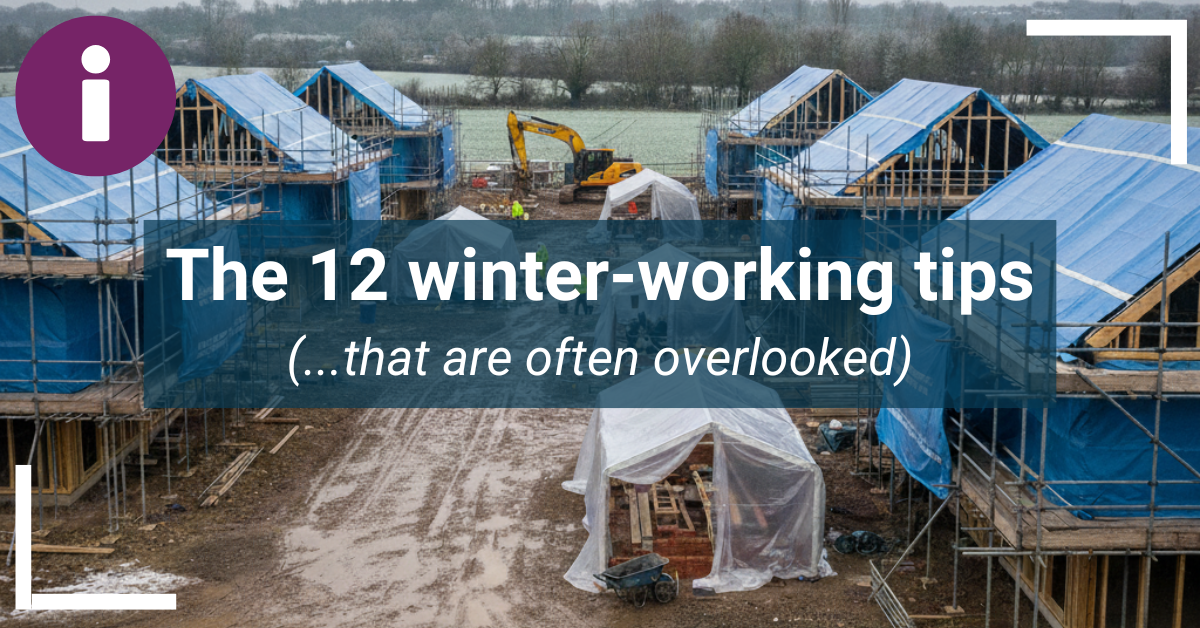
The 12 winter-working tips (in one place)
The ideas we shared weren’t complicated. They’re practical steps experienced teams already know work – but are often overlooked when programmes tighten.
- Know your site – map surface water routes, low points, exposure and snow build-up zones.
- Don’t underestimate drainage – temporary drainage and clear runoff routes prevent expensive delays.
- Put a snow and ice plan in place – responsibilities, routes, storage zones, daily checks.
- Take wind seriously – secure temporary works and build wind pause decisions into the programme.
- Plan weather buffers deliberately – agree resequencing options before winter forces your hand.
- Use temporary protection properly – small spends that protect the bigger investment.
- Plan materials and sequencing – protect sensitive materials and time installations with the forecast.
- Have a simple weather emergency plan – clear responsibilities when storms hit.
- Use landscaping to work with the weather – levels, stability and runoff routes aren’t later problems.
- Increase inspections during bad weather – check more often, fix sooner.
- Engage specialists early – drainage, structural, M&E, ground and temporary works input.
- Review insurance through a risk lens – ensure cover matches real winter exposure.
The point we kept coming back to
Winter resilience isn’t about overcomplicating a site. It’s about thinking ahead – so teams aren’t reacting under pressure when conditions change. Small decisions made early often prevent the expensive problems later.
View all the Tips on Linkedin >
(https://www.linkedin.com/company/block-architects-limited/ )

News: Two Signals Worth Watching in 2026
Two recent announcements caught our attention over the last month – not so much for the headlines, but for what they suggest about the direction of travel for development across Scotland.
Firstly, a multi-million pound investment into heritage-led town centre regeneration highlights a growing recognition that historic buildings can act as symbols for wider economic renewal. When handled well, heritage projects don’t just preserve the past – they create places people want to spend time in again, supporting footfall, business activity and long-term investment.
At the same time, the Scottish Budget 2026-27 signals continued support for housing, infrastructure and regeneration – but also underlines the delivery pressures facing the sector, particularly around planning capacity, compliance expectations and public finances.
Taken together, both signals potentially point to the same hopeful reality: opportunities for development across Scotland’s built environment looks to be (hopefully) improving.
But one point to take away. Successful projects will increasingly rely on clear early-stage planning, joined-up thinking, and delivery strategies that anticipate risk rather than react to it later.

One theme we kept hearing this year…
Across several conversations over the last two months, one theme kept appearing: uncertainty costs more than problems.
Teams can usually solve technical challenges – drainage, weather, logistics or procurement – but uncertainty around programme, planning or site risk creates the real pressure.
Our top tip – The earlier those risks are surfaced, the calmer project delivery tends to become.
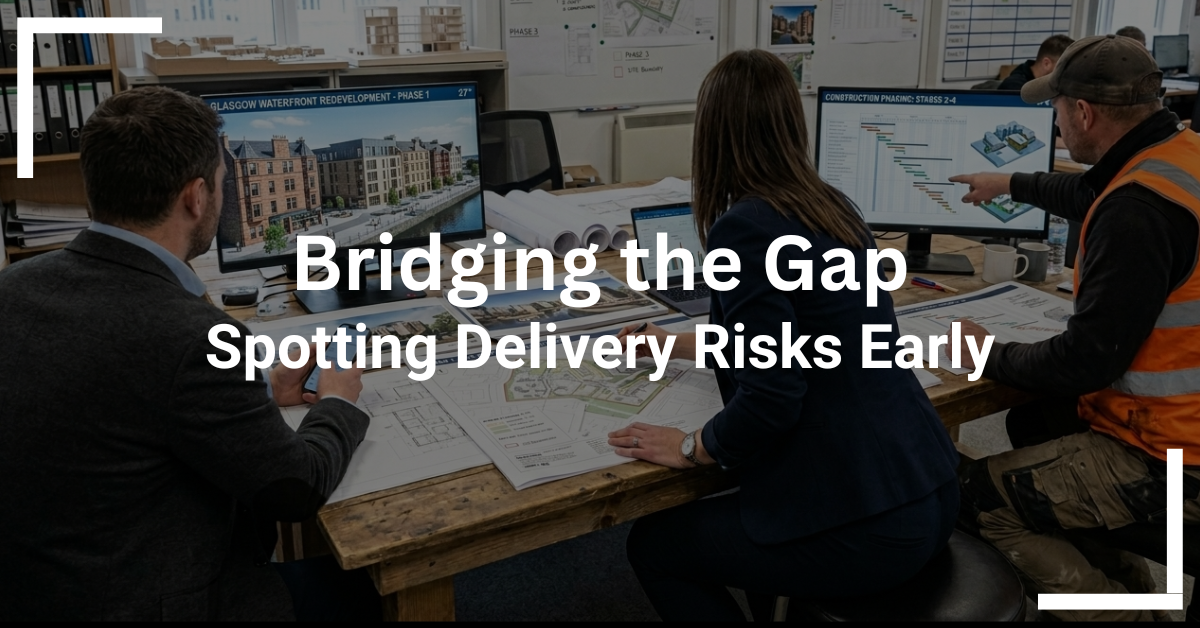
Helping Teams Spot Delivery Risks Earlier with our Studio
A common cause of delay on projects isn’t necessary technical complexity – it’s misalignment.
Different stakeholders often visualise a project differently: the developer, contractor, and planner, may all be imagining different things.
That gap in understanding is where many delivery problems begin.
This is where visual tools become useful.
Through CGIs, phasing visuals and simplified scenario views, you can::
- See site constraints earlier
- Communicate sequencing more clearly
- Test practical questions like access, storage and temporary works
Often a single visual can surface issues that would otherwise only appear months later on site.
And catching those early is usually far cheaper than fixing them later.
If you are interested in catching the problems early, then it’s maybe time to speak to our studio team..
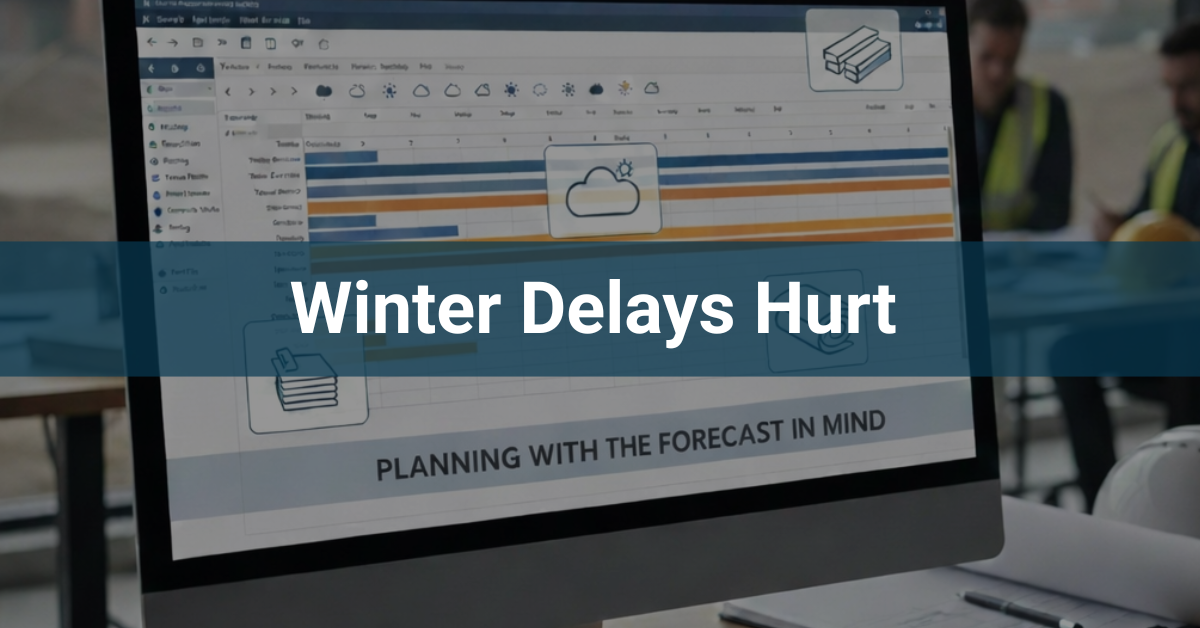
Reducing Programme Risk Before Design Starts – Planning Ahead
Winter delays hurt most when programmes are already tight – and planning uncertainty is often the first domino.
A common mistake we see across projects is that planning risks get addressed too late.
Many developers know the drill – Design progresses. Costs are explored. Programme expectations form.
Only then do planning constraints fully land such as drainage issues, access concerns, policy interpretation, consultation feedback.
At this point, the project already carries momentum, which makes change even more expensive!
NO ONE wants that! And this expense can be avoided.
Early-stage planning work is often less about submitting applications and more about answering three practical questions:
- What constraints are likely to matter most here?
- What evidence will decision-makers expect?
- What risks could affect programme or viability later?
When those answers are understood early, teams can design with clarity rather than reacting under pressure.
And in most cases, that leads to calmer delivery… and that’s something we all want!
If you are seeking calmer delivery, then maybe it’s time to speak to our Block Planning team
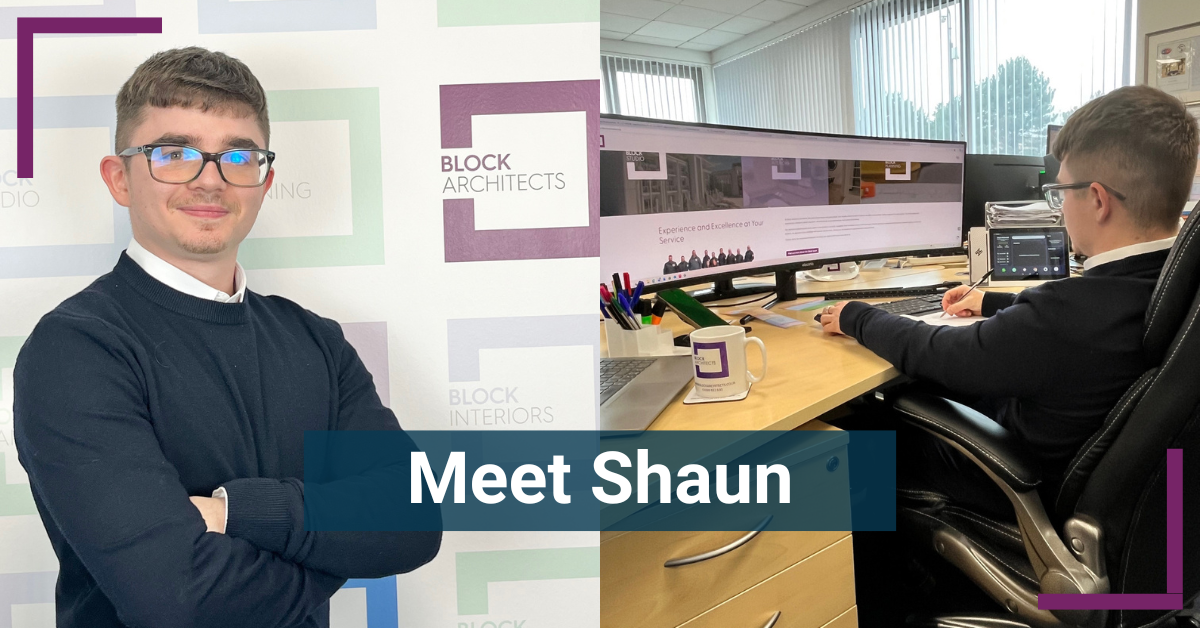
Meet Our New Team Member: Shaun McDonald
We recently welcomed Shaun McDonald to Block as an Architectural Assistant.
We know good practice doesn’t grow by accident – it grows by bringing in the right people at the right time.
Shaun joined us with a strong academic track record, but what caught our eye and stood out most was his approach to thing: curious, creative & grounded. It’s the sort of qualities that align with how we like to work at Block.
We hope you help us welcome Shaun to our team, If you’d like to connect with Shaun, his LinkedIn profile link is below.

The Hard Hat Talks: Conversations Worth Your Time
Two recent episodes of The Hard Hat Talks explored issues that sit quietly behind many construction projects – but increasingly shape how they’re delivered.
In Episode #18, Kenneth sat down with Scott Reid of Stratum Masonry to unpack the growing impact of skilled trades disappearing from the industry. From apprenticeship pathways to procurement pressures, the conversation highlights how undervaluing craft skills can quietly erode quality, sustainability and long-term project value.
In Episode #19, Kenneth spoke with Greig Denham of Moda Ceramics about the pressures suppliers are facing across the construction supply chain – from global sourcing challenges and rising manufacturing costs to the logistics realities still affecting project timelines and pricing.
Both conversations offer a grounded look at the challenges shaping delivery across the industry – from workforce skills to supply chains – and why early collaboration across the supply chain matters more than ever.
To catch up on the episodes ‘on-demand’, click the links below

One question we want to leave you with…
If winter weather hit your site tomorrow, what would fail first – and have you planned for it?
Most programme problems don’t come from the weather itself. They come from risks that weren’t visible early enough.
Feeling inspired? Get in touch with Block Architects to turn your vision into reality.
Recent Comments